Cart
0
The quick answer
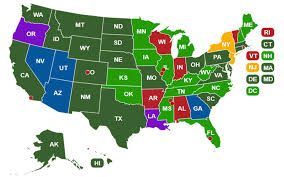
As of October 2026, natural kratom is still legal in most of the U.S., but 2026 changed more kratom laws than any year before it. Kratom is now banned statewide in 10 states, California prohibits selling it for consumption, and the federal government made concentrated 7-OH products illegal nationwide.
Kratom laws are changing fast, so this guide lists the date each change took effect. We check it regularly, and you should always confirm the rules where you live before you order.
This guide is general information, not legal advice. Kratom is not approved by the FDA to diagnose, treat, cure, or prevent any condition. For adults 21 and over only.
Federal law: the new 7-OH rule
Natural kratom leaf is not a federally controlled substance. Concentrated and synthetic 7-OH products are.
In July 2026 the DEA announced it would temporarily place 7-hydroxymitragynine (7-OH) above a set threshold, plus three related compounds (mitragynine pseudoindoxyl, MGM-15 and MGM-16), into Schedule I. The order took effect on August 25, 2026 and lasts two years, with a possible one-year extension.
What this means for you:
- Natural kratom powder and capsules with naturally occurring 7-OH below the threshold are not covered by the federal order.
- 7-OH tablets, shots and other concentrated or synthetic 7-OH products are now illegal to sell or possess anywhere in the U.S.
- MGM-15 and MGM-16 products are covered at any concentration.
Kratom Herbs has never sold 7-OH products. DEA announcement
States where kratom is banned
In these 10 states, kratom is a controlled substance. Buying, selling or possessing it is illegal, and we do not ship there.
|
State |
Banned since |
Notes |
|---|---|---|
|
August 28, 2026 |
Emergency Schedule I order; can last until August 28, 2027 |
|
|
July 1, 2026 |
House Bill 2365 |
|
|
July 1, 2026 |
"Matthew Davenport's Law" (HB 1649); possession is a misdemeanor, sale a felony |
|
|
March 25, 2026 |
Leaf, stem and extracts are Schedule I |
|
|
August 1, 2025 |
Act 41 (SB 154) |
|
|
2016 |
Schedule I |
|
|
2014 |
Schedule I |
|
|
Long-standing |
Kratom alkaloids are controlled substances |
|
|
Long-standing |
Kratom alkaloids treated as synthetic drugs |
|
|
Long-standing |
Kratom's main alkaloids are banned |
States with special rules
These states have not fully banned kratom, but their rules changed in 2025 or 2026 and affect what you can buy.
|
State |
Status as of October 2026 |
Details |
|---|---|---|
|
Illegal to sell for consumption |
The Department of Public Health says kratom and 7-OH products cannot be made or sold for consumption and has seized products statewide |
|
|
Temporarily banned |
A September 2026 law bans synthetic kratom and will allow regulated natural kratom for adults 21+, but kratom stays banned until the state finishes setting up those rules |
|
|
Legal for 21+ until July 1, 2027 |
A 2026 law bans kratom sales starting July 1, 2027; a manufacturer filed a lawsuit challenging it in June 2026 |
|
|
Natural leaf only |
Since May 19, 2026, only natural leaf and plain leaf powder are legal; extracts, shots, seltzers and edibles are prohibited |
|
|
Legal and licensed |
The first state to lift a ban; the Rhode Island Kratom Act took effect April 1, 2026, with licensing and age limits |
|
|
Legal, ban pending |
A ban bill (HB 5537) passed the House in March 2026 and was in a Senate committee at our last check |
|
|
Washington, D.C. |
Unclear |
Published sources disagree; check local rules before ordering |
Regulated states and local bans
Many states keep kratom legal for adults under a Kratom Consumer Protection Act (KCPA). These laws usually set a minimum age (often 21), require clear labels, and ban adulterated or synthetic products.
States with KCPA-style laws include Arizona, Colorado, Florida, Georgia, Maryland, Nevada, New York, Oklahoma, Oregon, South Carolina, South Dakota, Texas, Utah, Virginia and West Virginia. Age limits and labeling rules differ by state. KCPA overview · New York law
In every other state not listed in this guide, kratom is legal with no kratom-specific state law.
City and county bans: some local governments ban kratom even where state law allows it. Known local bans include San Diego (California), Sarasota County (Florida), Denver (Colorado), Jerseyville (Illinois) and Union County (Mississippi). Local bans list Check your city and county rules before ordering.
Frequently asked questions
Is kratom federally legal? Natural kratom leaf is not federally scheduled. Concentrated and synthetic 7-OH, plus MGM-15 and MGM-16, have been Schedule I since August 25, 2026.
Which states banned kratom in 2026? Connecticut (March), Kansas and Tennessee (July) and Massachusetts (August, by emergency order). North Dakota also has a temporary ban while it sets up new rules.
Did any state lift a ban? Yes. Rhode Island replaced its ban with a licensing law that took effect April 1, 2026.
Can I travel with kratom? Only through states where it's legal. Carrying kratom into a state that bans it can lead to criminal charges, even if it was legal where you bought it.
Will Kratom Herbs ship to my state? We do not ship to states or localities where kratom is banned. If you're unsure, contact us before ordering.
Sources
- DEA: temporary scheduling of 7-OH and related substances
- KATU: 7-OH Schedule I order took effect August 25, 2026
- Massachusetts DPH emergency regulation 105 CMR 726
- Kansas HB 2365 signed
- Tennessee kratom ban notice, Metro Nashville
- Connecticut Department of Consumer Protection
- Louisiana Act 41 digest
- California Department of Public Health
- North Dakota special session law (KFGO)
- Kentucky KRS 217.2202 (effective July 1, 2027)
- Ohio Board of Pharmacy rule (WFMJ)
- Rhode Island Kratom Act
- Michigan HB 5537 status
Last checked October 9, 2026. Laws change quickly; confirm current rules with your state and local authorities.